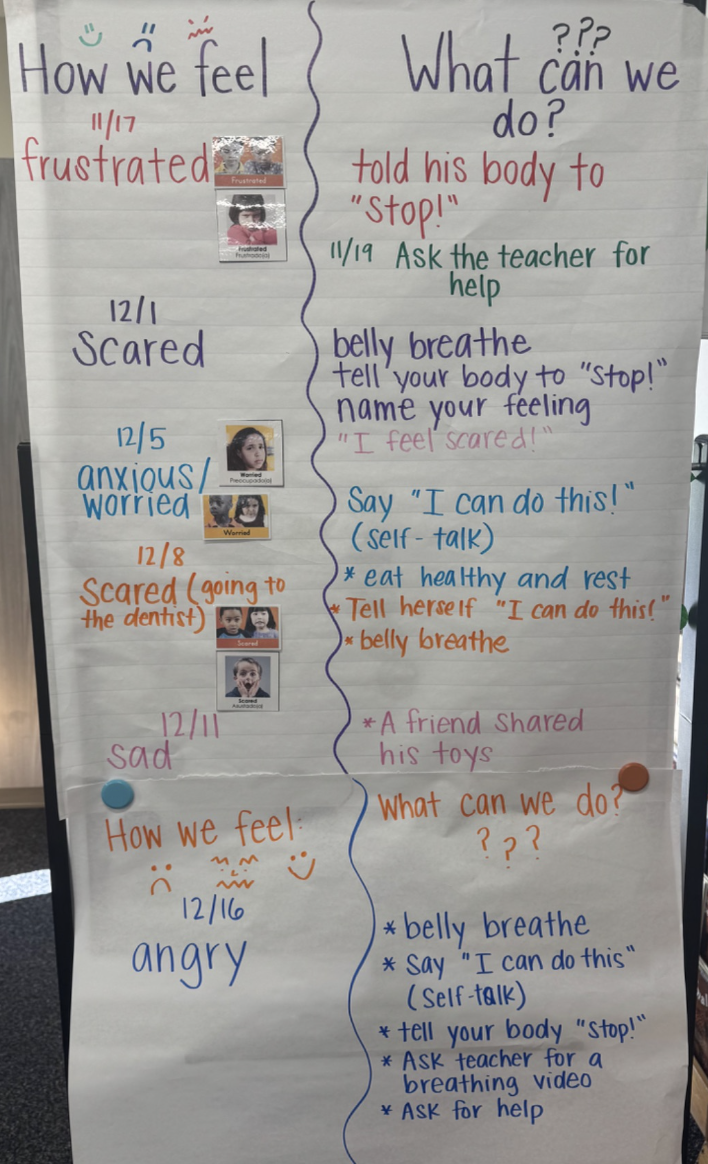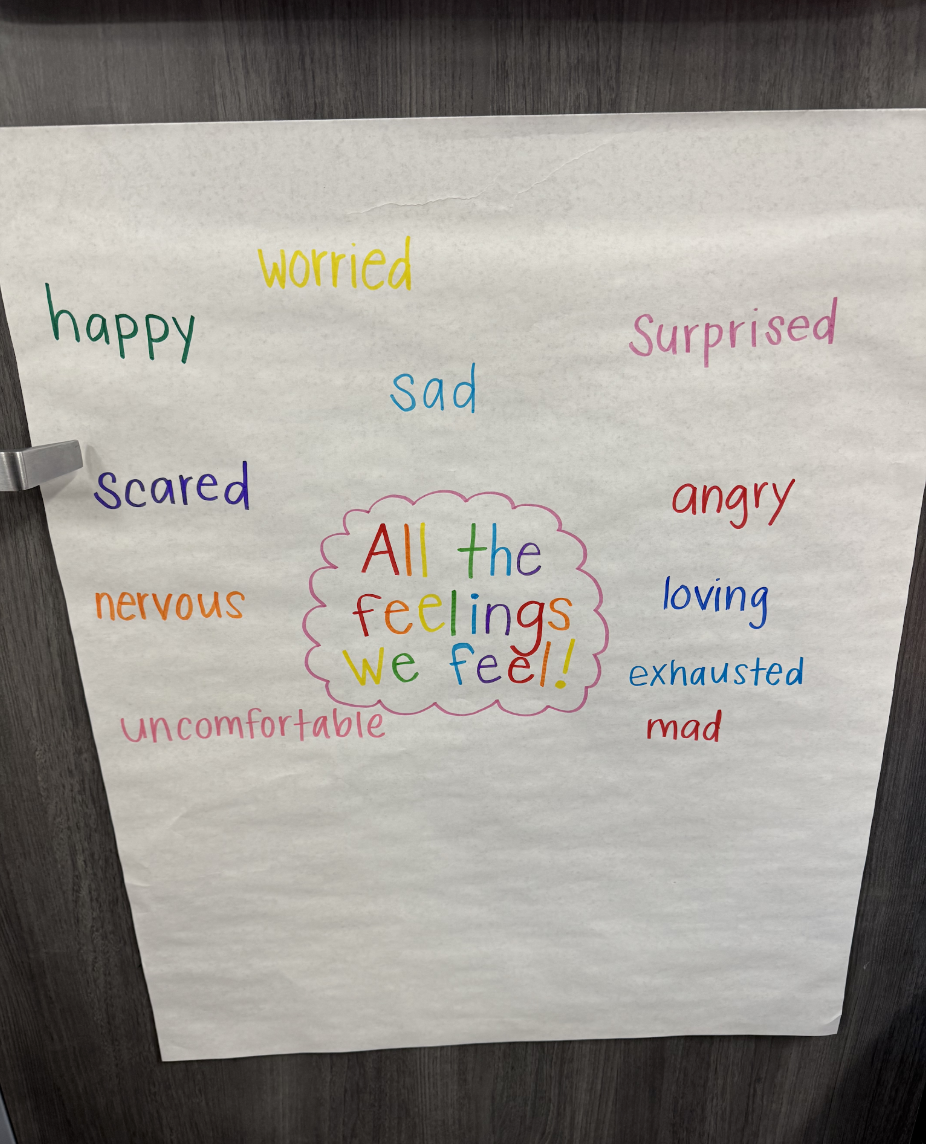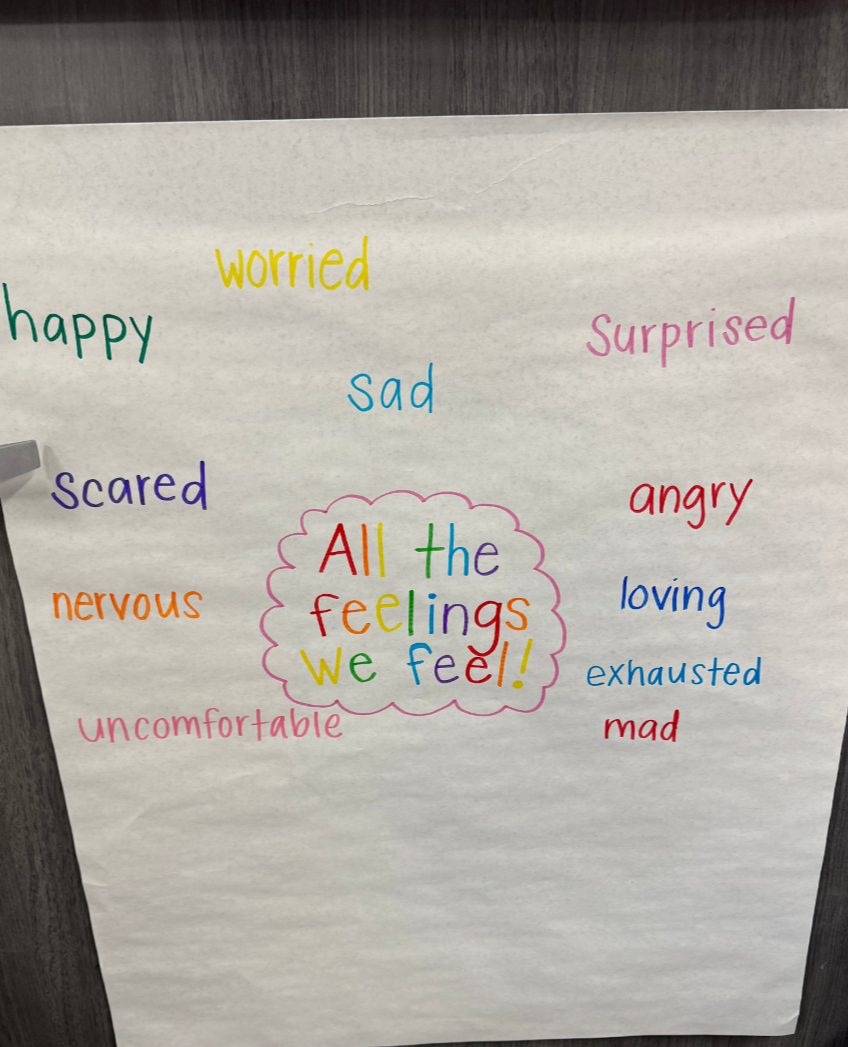
For my induction project, students engaged in ongoing SEL mini-lessons delivered through a variety of instructional contexts, including circle time, small groups, and daily classroom routines. Throughout the project, students developed the ability to identify emotions in themselves and others and began applying specific feeling vocabulary during play and real-life interactions. They also practiced and used response strategies such as deep breathing, problem-solving with peers, and seeking adult support to manage emotions in authentic classroom situations. Observational data, checklists, and reflection prompts demonstrated growth in students’ emotional awareness, self-regulation, and social communication. As a result, students showed increased confidence in expressing their feelings and navigating peer interactions, which contributed to a more empathetic and supportive classroom environment.The linked evidence demonstrates students’ progression in identifying and using feeling words, as well as their growth in applying problem-solving strategies and responding to big emotions in their daily lives. It also highlights their developing ability to recognize emotions in others and respond with empathy and support.